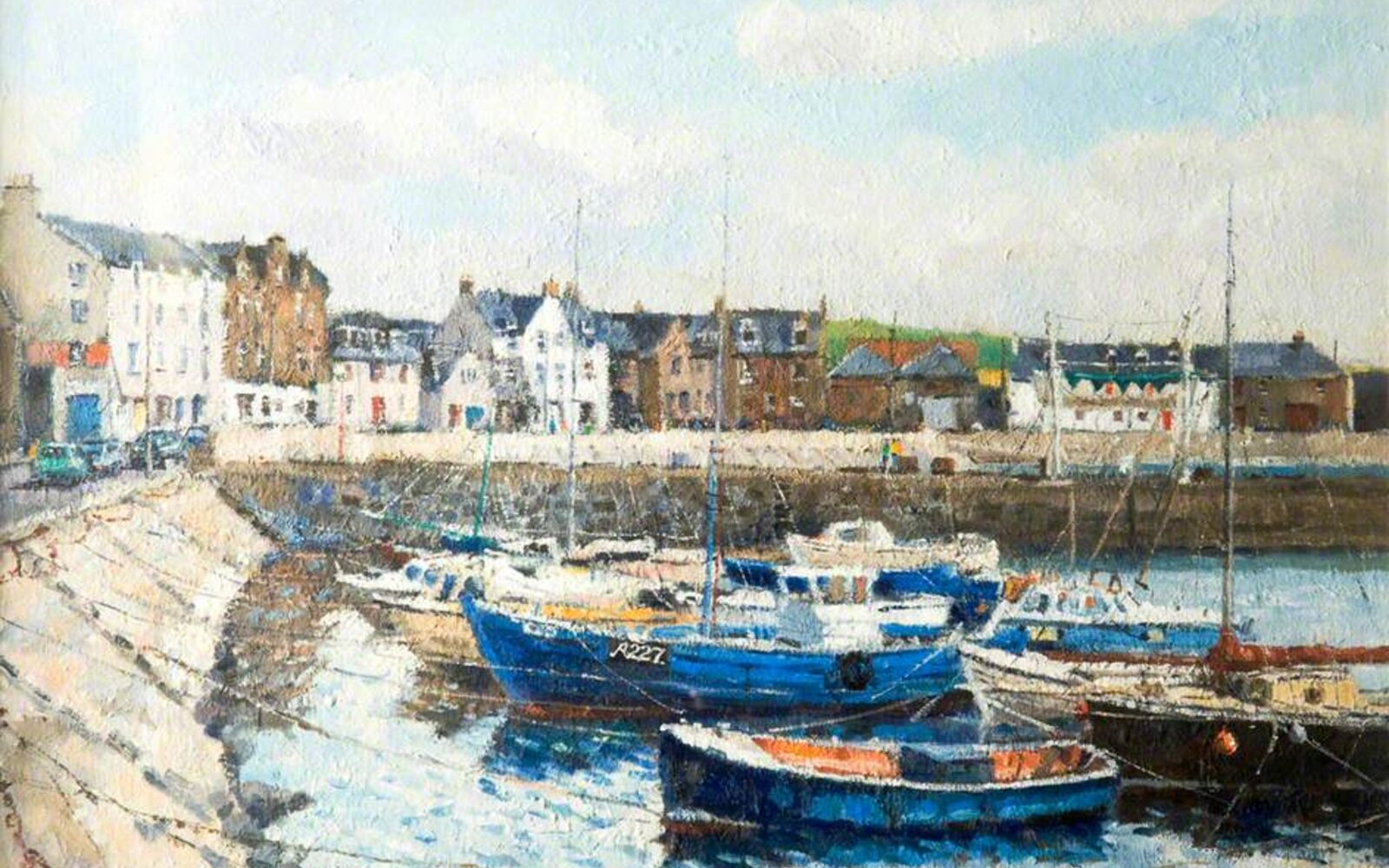
Stand on the harbour wall at Stonehaven on a calm evening and it is easy to read the place purely as scenery: still water, moored boats, stone houses leaning together behind. That reading is not wrong, but it is incomplete. The harbour is, first and last, a piece of infrastructure. It was shaped and reshaped over generations to make a difficult coast usable, and almost everything attractive about it now is a side-effect of solving a practical problem: how to keep boats and goods safe on an exposed North Sea shore.
Why a harbour here
The bay at Stonehaven offers something the open coast does not — a degree of natural shelter, deepened and disciplined over the centuries by walls and piers. The headland to the south breaks the worst of the swell, and the curve of the shore gave early builders something to work with. None of it was enough on its own. The inner and outer basins, the protecting arms of the piers and the steady maintenance behind them are the reason boats could come and go with any reliability. Without that structure, the bay is just a pretty notch in a hostile coast.
It is worth being plain about the weather, because the harbour exists because of it. The North Sea here can turn quickly, and the same storms that batter the sea front have, over the years, damaged piers, flooded the lower streets and reminded everyone that the shelter is engineered rather than given. The people who worked this harbour read the sky and the swell as a matter of livelihood and safety, not interest.
A working place
For most of its life the harbour was about fish and trade, not visitors. Boats went out for herring and white fish; the catch was landed, gutted, salted or iced, and moved on. Around that central activity grew the supporting trades that any working port needs: chandlers, coopers, rope and net work, boat repair, the carting of goods up from the quay. The buildings closest to the water were homes and stores for people whose day was set by tides and markets. The smell, the noise and the mess of a real fishing port are hard to imagine now, but they were the point of the place.
There is also a rhythm to a working harbour that the calm evening hides. Everything turned on the tide and the market: when to leave, when to land, when to sell before the catch spoiled. The slipways, the quay and the very width of the lanes were sized for that rhythm, for barrows and barrels and the quick movement of perishable goods. Stand in the right spot and you can still feel how the place was organised around speed and weather rather than leisure.
Trade went both ways. Goods came in by sea that were awkward to bring overland across the Mearns, and produce and fish went out the same way before roads and rail offered alternatives. A harbour is a junction: it is where the sea route meets the land route, and where one form of carrying hands over to another. Reading the harbour as infrastructure means seeing it as that junction rather than as a destination in itself.
From work to welcome
The shift from working port to visitor focus was gradual and is still incomplete. As fishing declined and as roads and rail took over the heavy carrying of goods, the harbour kept fewer commercial boats and gained more leisure and pleasure craft. The buildings that once stored nets and salt became homes, places to eat and small businesses serving people who come to look. The open-air swimming pool, the sea front and the walk out to the headland turned the area into somewhere to spend an afternoon rather than a day's labour.
This change is real, but it should not erase what came before. The proportions of the harbour, the strength of the walls, the tightness of the old lanes — all of it was determined by work, and all of it still tells you about work if you look. The most rewarding way to visit is to let the scenery be the second thing you notice. First, read the structure: the piers holding back the sea, the basins keeping boats steady, the close-packed houses that grew up because this was a place to earn a living from the water. Do that, and the view you came for means a good deal more.