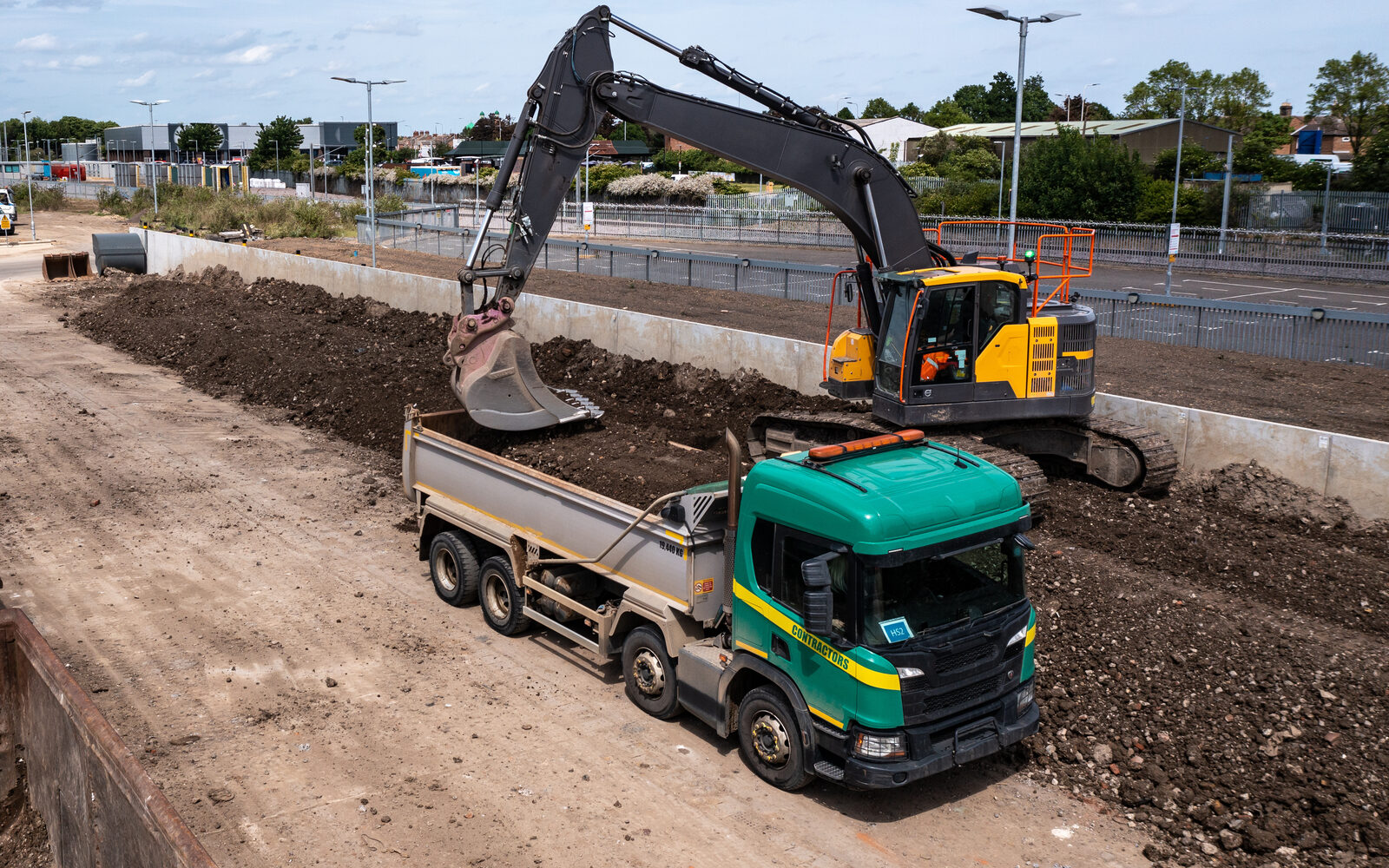
Watch any building going up in the north-east and you watch only the last act. By the time the cladding goes on, dozens of separate journeys have already been made and forgotten: stone from a quarry, sand and gravel graded for concrete, structural steel from a fabricator, framing timber from a yard, and the steady removal of spoil and waste in the other direction. The construction supply chain is mostly transport, and in Scotland the geography that shaped the old trade routes still shapes the new ones.
Materials decide the routes
The heavy, low-value materials come first, and they set the pattern. Aggregates, sand and crushed rock are bulky and cheap, so the rule of thumb has always been to source them as close to the site as the geology allows. A quarry near a road that can take loaded tippers is worth more than a better-quality deposit twenty miles further out. This is the same logic that put the old lime kilns and stone quarries where they were: weight and distance were the real costs, and they still are. Concrete adds a clock to the problem, because ready-mixed loads have a working life of a couple of hours from the plant, which is why batching depots cluster around growth areas rather than serving a whole region from one site.
The mix of loads
A working site does not receive one kind of delivery. Over the life of a build the haulage demand shifts through distinct phases, each with its own vehicles and its own awkwardness.
- Groundworks: tippers in, muck-away out, plant arriving on low-loaders.
- Structure: steel and precast units, often oversized and needing escorts or timed deliveries.
- Fit-out: a long tail of smaller, mixed loads, timber, boards, fittings, where reliability matters more than volume.
- Throughout: waste removal and recycling, increasingly tracked and separated by type.
Each phase competes for the same constrained thing: space and time at the site gate. A modern project on a tight urban plot has nowhere to store materials, so deliveries are sequenced to arrive close to the hour they are needed. That places real weight on the haulier, who has to hold a slot, route around restrictions, and absorb the delays that sites inevitably create. A regional operator such as Logan Logistics earns its keep less on the cost per mile and more on whether the load turns up when the programme says it should.
That matters just as much for contractors who start moving their own plant, spoil or materials on vehicles that tip them into licensing territory. Before the first additional unit is put on the road, it helps to understand what a sound operator licence application actually has to evidence, from vehicle authority to the operating centre.
An old relationship, new tools
It is tempting to think of freight as a purely modern concern, but the construction supply chain is the clearest living example of a very old arrangement between place, material and route. The medieval mason worked stone close to where it was quarried because moving it was the expensive part. The harbour towns of the east coast grew where they did because the sea was the cheapest road for heavy goods. What has changed is not the principle but the precision. Telematics and load-tracking now let a haulier prove exactly when a vehicle arrived and how it was driven; weighbridge data ties a quarry's output to the trucks that carried it; planning rules and emissions zones increasingly dictate which vehicles can go where and at what hour.
The materials have changed too, though less than people assume. Steel and engineered timber carry loads that masonry never could, and that allows lighter structures and fewer foundation journeys. But the bulk of any build is still the heavy, humble stuff: the aggregate, the concrete, the fill. The clever, low-carbon parts of a modern building are a thin skin over a great deal of weight that still has to be moved by road.
Why it is worth understanding
For anyone interested in how a place actually functions, the construction supply chain is a good lens. It explains why certain roads carry the traffic they do, why depots and quarries sit where they sit, and why a delayed delivery can stall a whole site. It also connects the present to the past more honestly than most heritage stories. The lorry on the bypass and the cart on the old turnpike are doing the same job: getting heavy material from where it is to where it is needed, at a cost the work can bear.