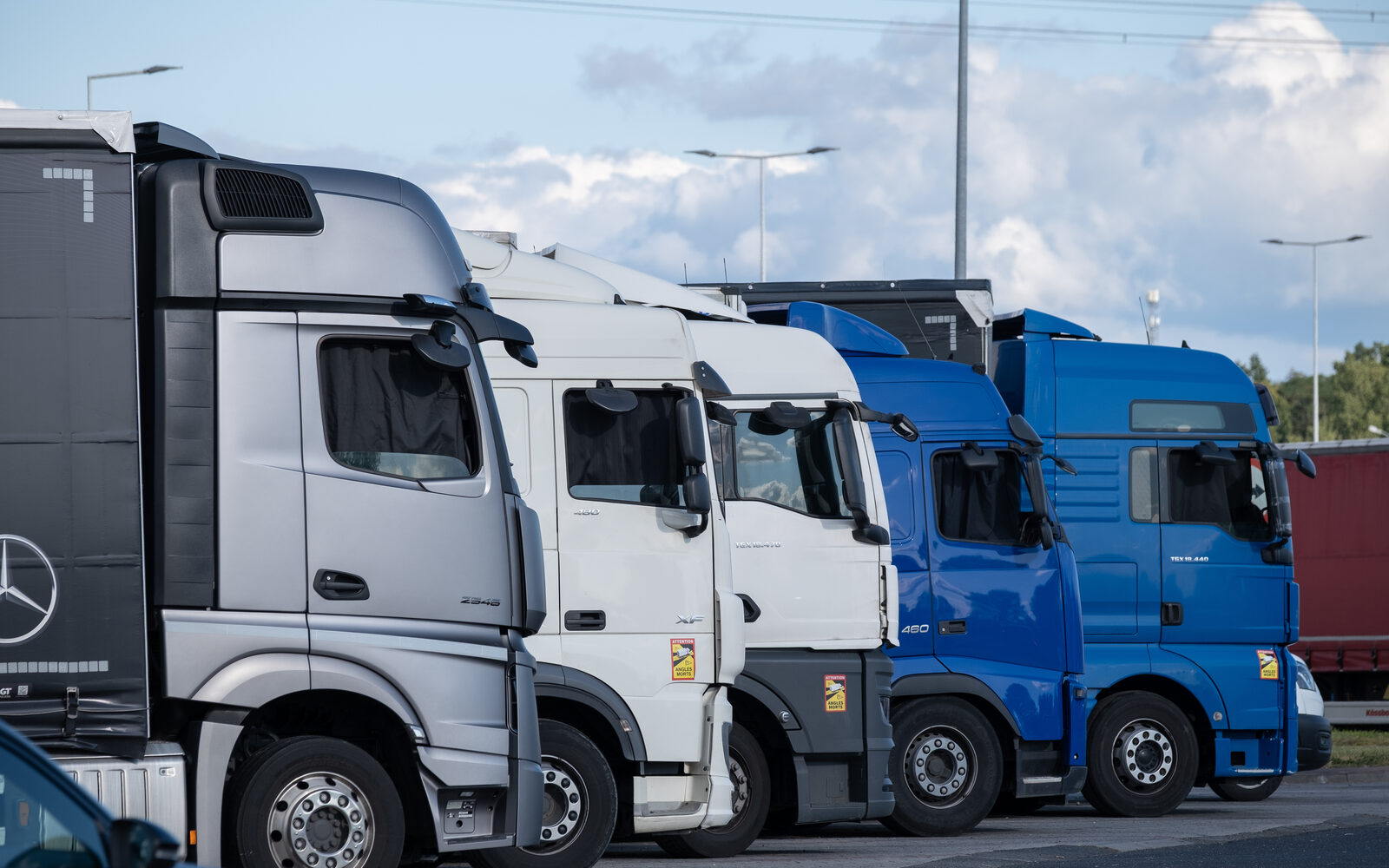
Stand near the edge of Stonehaven on a weekday morning and the movement is constant. Delivery vans turn into the residential streets, a supermarket lorry reverses carefully towards a service bay, a flatbed loaded with timber waits at a junction, and the steady flow of larger vehicles passes on the trunk road above the town. None of this looks like history, and yet it answers exactly the same question that the coaching inns and the turnpike trustees once answered. How does a town on the edge of the country keep itself supplied and connected?
The honest answer today is that almost everything arrives by road. The harbour still matters to the town's character and to its inshore fishing, but the bulk of what Stonehaven consumes and produces now travels on wheels along the A90 corridor and the network of smaller roads that feed off it. That single trunk route does an enormous amount of work, linking the town to Aberdeen in one direction and to the rest of the country in the other, and the variety of traffic it carries is a fair portrait of the local economy.
What actually moves
Anyone trying to understand that wider network can learn a lot by looking beyond a single town. A current list of UK transport companies shows how many different types of carrier sit behind ordinary deliveries, from regional general haulage to specialist vehicle work.
For a builder, merchant or farm business thinking of putting its own heavier vehicles on the road rather than relying entirely on outside carriers, the real starting point is understanding how to apply for an operator licence before the first vehicle is booked.
It helps to break the flow down into the kinds of goods that make it up, because each has its own rhythm and its own demands on the road.
- Retail and household deliveries. The vans that thread through the streets carry the daily business of a modern town: parcels, online orders, chilled and ambient groceries restocking the shops. This traffic is light per vehicle but high in frequency, and it has grown steadily as more shopping has shifted to home delivery.
- Construction and materials. Aggregate, timber, ready-mixed concrete and plant move to and from building sites across the district. These are heavy, slow loads, sensitive to gradient and to the condition of minor roads, and they put real wear on the surfaces they use.
- Farm supply and produce. The agricultural land around Stonehaven still generates and consumes a great deal of traffic, from feed, fertiliser and machinery coming in to livestock and crops going out, much of it seasonal and weather-bound in a way the old carriers would have recognised at once.
- Hospitality and catering stock. The pubs, cafes, hotels and restaurants that serve residents and visitors depend on regular drops of food, drink and supplies, and that demand rises sharply in summer when the town fills up.
- Regional haulage passing through. A good deal of what travels the A90 is not bound for Stonehaven at all but uses the corridor on its way between Aberdeen and points south, sharing the same road with everything local.
The same constraints, modernised
For all the change, the constraints would be familiar to anyone who drove the coaching roads. Weather still closes the higher inland routes when the coast stays open. Gradients still slow heavy vehicles and shape which roads they choose. A single blocked junction or a closure on the trunk road still ripples outward, just as a washed-out ford once forced a carter onto a longer way round. The difference is scale and speed: a problem that once delayed a wagon by a day now delays a fleet of lorries by an hour, but with far more vehicles relying on a far busier network.
There is also a real tension in a place like this between being well connected and being overrun. The same road that brings the town its supplies brings the through traffic that residents would rather did not pass their doors, and the same growth that supports more shops and more visitors generates more vans and more deliveries. Managing that balance is the quiet, continuous work behind a functioning town, and it rarely makes the news.
A continuous story
Seen this way, the lorry on the A90 is the direct descendant of the packhorse and the coach. The cargo has changed from salted fish and farm goods to parcels, building materials and supermarket pallets, and the journey that once took a day now takes an hour. But the underlying truth has not moved at all. Stonehaven sits where the land meets the sea, with high ground at its back and a city up the coast, and keeping it supplied has always meant solving the same problem of distance, weather and terrain, one load at a time.